Saturday, 15 December 2012
The Tragedy at Newton: Time to Get Serious on Guns
Every time a tragedy such as the one which occurred yesterday in Newton occurs, there is a temptation as a writer to try and find the best sentence, the most profound, witty or evocative combination of verbs and adjectives, to try and encapsulate the sense of horror and tragedy better than everyone else. Yet in the wake of such a mass-murder as yesterday's, the old cliché does ring true; there are no words - the phrase "20 children were killed" is as bleak, evocative and hear-rending as just about anything any writer could come up with. Anything else is self-indulgence; oh, you described the killer as a "maniacal narcissist"? Well done, you.
Few details about the killer himself are known - though we can assume that he was mentally unstable in one way, shape or form. We know that he killed his mother before going on to massacre those children. We know that he dressed in black. We know what kind of gun he used. But one thing we do know for certain is this: it was far too easy for him to get hold of his murder weapon.
There is a phrase often said by those on the pro-gun right-wing in the US: guns don't kill people, people kill people, and to some extent that's true - murder, like all crimes, requires agency - a person doing the deed. There is nothing inherently evil about inanimate objects, even ones that fire hot pieces of lead at lethal speeds. This banal truism, some say, logically dictates that getting rid of guns wouldn't get rid of all the madmen willing to murder innocent people in cold blood.
And yet nobody suggests that guns should be done away with entirely - there is certainly private gun ownership in the UK, for instance. After 9/11, the problem was not the ubiquity of air travel - the problem was that lax security made it too easy for terrorists to smuggle box cutters onto an aeroplane, take over its cockpit and crash it into a skyscraper. So there was appropriate legislation and we all have incredibly restrictive security at airports, making it harder for people to board a plane with a dangerous weapon. Equally so, to suggest that three mass-killings (!) in one year, one of which involves the sadistic murder of twenty young schoolchildren (practically babies) requires no serious re-thinking of the ease by which psychopaths can obtain and use deadly weapons is practically to be complicit in the murder of innocent children.
Thursday, 13 December 2012
European Diary: Part One
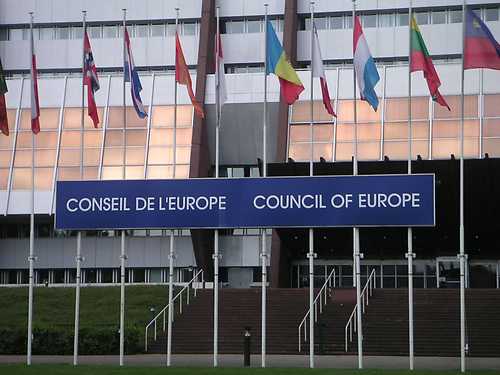
Once again, apologies for the long time in between updates, I've recently started a new internship at the Council of Europe, which has been taking up most of my time these past few weeks, and I've been privy to a few things I thought I'd share with the dear readers of this blog about the day-to-day happenings in this international co-operative hub.
As with most European employees in the Council of Europe and within the European Union, most time is spent idiling about and finding out best ways to spend the money of the taxpayers of member states. I just came back from a seminar entitled 'British Ale: What Can Be Done?', in which we debated the demerits of not just British ale, but unsophisticated cultural relics in general - pasties, Yorkshire accents, you name it - it's on the chopping board for our 2030 Federal Integration SuperState Action Plan organised by the Department for Individual Unity. Far from risking any sort of sentimentality, it was our sincerely-held view that only fine wines and the occasional Croque Monseiur are appropriate things for Europeans to dine on, and appropriate legislation should be taken across the European Union to ensure conformity with our enlightened findings at the end of the conference. The benefits of an education are, amongst a wealth of information, a certain detatchment from symbolism and bland patriotism - "symbols are for the symbol-minded", said George Carlin - and years after his death, European beauracrats are putting his words of wisdom into practise.
I was very privileged to attend and participate in a conference on the problem of rogue British democratic Parliaments. A problem which could easily befall such an international organisation as the Council of Europe and the European Union is the institutional gridlock that comes about invariably in democratic Parliaments themselves. As I walked into the bright, imposing conference hall, I saw the nervousness amongst some initiates that this would be a typically democratic supranational affair in which member states represented their citizens and nothing got done. Fortunately amongst the attendees of the conference, there was a generally-held consensus that the benefits of the European project in general was the ease with which standards can be fleshed out without recourse to democratic elections. Our work is too complicated, too esoteric, and too important to allow the common man or the average woman's grubby hands or prying eyes to bother with our dealings.
I've had the fortune of meeting some of the European Court of Human Rights judges, at least the minority that speak English, and their insights into the nuances of legal policy are refreshing. There's no unsophisticated distaste for rapists, terrorists and serial killers here, but more an acknowledgment that even the worst amongst us deserve our compassion and respect. "People don't seem to understand" said one of the judges to me "that if a man is capable of murdering his wife and children, he is perfectly capable of voting."
We have a long way to go until we can massage the nationalist prejudices of nation states out of our integrated supranational federal state. "The first thing to do is influence children", one delegate confided to me, "if we can make European education compulsory in all schools (perhaps even pre-schools) then we can make sure that there are no dishonest, subversive, despicable lies floating around the minds of European citizens." I happen to agree - there simply is no room for compromise on this one - we either teach children of the benefits of obscure neo-liberal trade policy and free movement of workers, or we see this glorious republic perish.
I've already said too much and I fear that the telescreen in my office is starting to recognise my inactivity as the bright, sinister smiley face imposed on the wall opposite is starting to grin even wider (as the Council of Europe's 'freindly reminder' of why you're here). I hope that this has been illuminating and remember - we're better individuals, when we're individuals together.
Tuesday, 30 October 2012
Falsifying Prophets
Anybody that thinks that this race is anything but a tossup right now is such an ideologue, they should be kept away from typewriters, computers, laptops and microphones for the next 10 days, because they're jokes.I get the point, but a toss-up can still have a favourite, and a 27% chance of victory is still not a bad chance. Tim Stanley has even more harsh words:
Trident Renewal: Where Do Our Spending Priorities Lie?
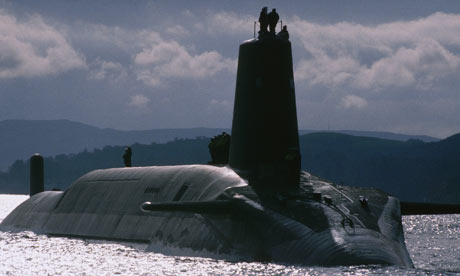
The Defense Secretary has announced £350m in more spending on replacing the unnecessary Trident nuclear submarines:
The Defence Secretary also announced a test launch of an unarmed Trident ballistic missile in the Atlantic Ocean last week which [The Campaign for Nuclear Disarmament] branded "profligate and unnecessary", at a cost of over £25 million per missile and at least that for the test itself.£25 million for a single test- that's over twice as much as the funding provided by the Home Office to address gang violence in problem areas (£10 million). For one test. Of a program that may end up costing £130 billion (!) in the long-term. That's over one-hundred times the cost of benefit fraud (£1.2 billion), supposedly so costly to the country as to be a governmental priority. So what's the purpose of Trident? Even Tony Blair admitted renewal was only for political expediency, and that Trident's efficacy was non-existent militarily. The spending priorities of the Coalition are quite striking. Some of the biggest social cuts have been so far.
Monday, 29 October 2012
The Game: UK
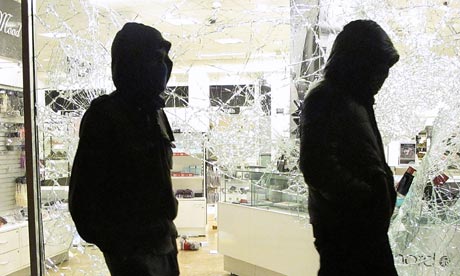
The Centre for Social Justice's much-publicised report on gang violence in the UK is harrowing reading. It paints a picture of a government using the riots as a pivot to make the coalition look tough on crime whilst neglecting the root causes of serious social unrest in urban Britain. In short, the strategy of going after high-profile gang leaders in the wake of the riots (on paper, a fairly sensible approach) backfired:
Thursday, 25 October 2012
Lies and the Lying Liar Running for President
Waldman asks what everyone's thinking:
As the end of this election approaches, it's worth taking a step back and asking this question: In the entire history of the United States of America, from George Washington's election in 1789 on down, has there been a single candidate as unmoored from ideological principle or belief as Mitt Romney?
It's a question I asked myself a short while ago, to which the only worthy contender that comes to mind is, perhaps, Nixon. Yet beneath Nixon's blatant corruption, his boiling contempt for the electorate and the smirking insincerity of his attempts to convince people he was an individual possessed with ordinary mental function, there was a thread, a narrative - you knew where the guy stood. His lies were detectable - you knew enough about who he was to detect when he was deliberately trying not to be it.
Grading Barack Obama
Tuesday, 23 October 2012
Third Debate: First Impressions
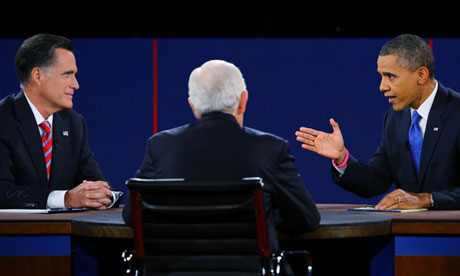
Let's be realistic here, as a non-US citizen, I'm clearly in the tank for Obama, or so says a recent BBC World Service opinion poll. Gary Younge, writing for The Guardian, thinks that preference is misguided, they're both as bad as each other. I get his point - but rather than equivocate, I would instead offer a bad versus worse dichotomy and Obama is clearly the former.
Last night, Romney's message was clear: "Obama's effort is admirable, but as President I would be better, because, leadership, prosperity, jobs - can we talk about the economy now, please?" Romney's vague tack to the center might be a successful strategy for issues on which the President is weak, like the economy. But Americans regard the Obama foreign policy as one of the President's strengths, and Romney's hazy promise to be somehow better than the current administration made him look like a lightweight.
Body language scored points for Obama - throughout the 90 minutes he fixed Romney with a combative stare that reminded me of Gordon Brown, sans psychopath. Obama seemed comfortable in his skin, like he knew the material and was eager to offer a vigorous defense of his record. Romney wasn't First Debate Obama bad, but he stuttered more than usual and it's clear that foreign policy is not his strong suit.
Will this debate alter the outcome of the race? Perhaps - in a neck and neck race like this one, one or two points could be the line between victory and defeat. Obama clearly fucked the dog in the first debate, giving undecided voters a good reason to vote for Romney, blowing a clear lead and disappointing supporters, but seems to be clawing back some support. Even the smallest shift could affect the outcome on November 6th.
It's a shame that foreign policy hasn't been given the prominence in this election it deserves, since the US President exercises far more control over it than any other branch of government. On the economy, the President is merely a player in a political system which is itself a player in a market economy. On foreign policy - the President has something close to dictatorial power.
Three wins for Obama/Biden and one win for Romney/Ryan, then. And yet on debates, it still feels like 1-0 to the Republican ticket.
(Image source: http://www.guardian.co.uk/commentisfree/2012/oct/23/obama-fires-romney-falters-presidential-debate?newsfeed=true)
Sunday, 7 October 2012
Yes, Obama's Shitty Debate Performance Matters
Debates don't matter, some people say. Except, of course, when they do. Historically speaking, a weak debate performance from an incumbent rarely alters the outcome of an election in any meaningful way. Debates come along too late in the game - most voters have made up their minds already about who to vote for and a little rhetorical flourish, or an appearance of self-assured confidence for 90 minutes in a controlled environment won't convince anyone to vote for candidate X or abandon their support of candidate Y. Moreover, most people watching are not crucial swing voters - but those with active interests in politics; in other words - those who have probably already made up their mind. Sure, Obama 'won' all of the debates against John McCain in 2008, but McCain was an especially weak opponent and let's remember - Obama also lost all his debates against Hillary. Equally, Reagan got flattened by Walter Mondale in the first 1984 presidential debate - turning in a tired, confused performance against Walter 'One State' Mondale. Debates are more political spectator sport than pivotal moments, and a lacklusture yet competent performance by an incumbent may not spell death for his campaign. Conversely, a commanding performance from a challenger can generate a bout or two of favourable headlines without significantly affecting either voter turnout or swing-voter preference.
Tuesday, 25 September 2012
Why I Am Not A New Atheist
A long time between updates, excused (I hope) by a combination of frantically typing up my masters dissertation and relocating to Strasbourg, France (a very lovely city, thank you very much). Above is a picture of the Strasbourg Cathedral, which I stumbled across yesterday whilst familiarising myself with the city centre. It's an immense and immensely beautiful piece of Gothic architecture - a testament to man's sense of awe with and inspiration from the infinite and, for me, highlights some of the reservations I have with what has has been dubbed the 'New Atheism' movement.
Tuesday, 28 August 2012
Mickey Mouse Classrooms: Just What is Our Children Learning?
It's been about six years since I left school now, and every year since the same report comes in: on average, GCSE and A-Level pass grades are up. Last year, 97.8% (?!) of pupils achieved a pass grade in their A-Levels and 27% of those were the highest grades. And good for them, too - but excuse me for not buying the notion that the increase in pass grades is entirely down to the fact that students are now harder working than they were, say, 20 years ago.
Saturday, 11 August 2012
Who is Paul Ryan?
| Former Massachusets Governor Mitt Romney and House Budget Committee Chairmen Representative Paul Ryan in Milwaukee April 3, 2012. AP Photo/M. Spencer Green |
Thursday, 9 August 2012
Messiahs Versus Naughty Boys: Sam Harris and His Detractors
Sam Harris gets annoyed at his critics (extensive critique after the jump):
Anyone familiar with my work knows that I have not shied away from controversy and that many of my views defy easy summary. However, I continue to learn the hard way that if an issue is controversial, and my position cannot be reduced to a simple sentence, my critics will do the work of simplification for me. Topics like torture, recreational drug use, and wealth inequality can provoke outrage and misunderstanding in many audiences. But discussing them online sets your reputation wandering like a child across a battlefield—perpetually. Anything can and will be said at your expense—or falsely attributed to you—today, tomorrow, and years hence. Needless to say, the urge to respond to this malevolence and obfuscation can become irresistible.
The problem, however, is that there is no effective way to respond.
Wednesday, 8 August 2012
The White Man's Burden: Minority Report
Conor Friedersdorf has a piece over at The Atlantic about media coverage of white terrorists versus their dark-skinned counterparts:
It ought to be self-evident that non-Muslims perpetrate terrorist attacks, and that a vanishingly small percentage of Muslims are terrorists, but those two truths aren't widely appreciated in America. That doesn't mean they won't reassert themselves, for terrorist attacks have always been with us; the tactic has never been exclusive to a single ideology for very long; and the power the state marshals against one sort of terrorist is sure to be first to hand when another sort strikes.Mmhm. And it's not like the UK is immune from this sort of over-extrapolation. A relatively recent ESRC-funded report conflates the coverage of Irish terrorism during The Troubles with coverage of Islamic extremism in the War on Terror:
Saturday, 4 August 2012
The Violent Hermit Kingdom
Losing One's Moral Presence
That the soldier’s power exceeds any rule does not render him powerful but, rather, destroys him. Being “above the law” drains the soldier of his defining principles. At times, he might feel he is passively witnessing the person he has become: his hands, signaling arbitrarily “go ahead,” “wait over there,” “shut up,” “show me this,” “show me that”; his voice uttering words: “I don’t care, your permit has expired,” “have a good day,” “where do you think you’re going?”
Some time will pass before it will occur to him that by failing to distinguish between the hostile and the innocent he might not only be failing his mission to defend his country but also failing values and sentiments that he was raised to uphold and act upon. But how can that be, he asks himself, if all along he had every intention of doing what is right? He was determined to defend his country while remaining humane and observing his moral compass. How could he have failed so miserably in both?
University in Decline
The big thing that’s changed has been the external environment of what it means to teach in university. Universities used to be communities; they used to be places where intellectual life really happened. They were also places where avant-garde stuff was happening. And that’s – in England anyway – completely ground to a halt. Universities are largely sold as factories for production of increasingly uninteresting, depressed people wandering around complaining. There’s been a middle-management take-over of our education, and it’s depressing. So universities, like the university I was at – Essex, which was a radical, experimental, small university, but had a bad reputation but did some great stuff – have become a kind of pedestrian, provincial university run by bureaucrats. That was one of the reasons why I got out when I got out in 2004.
(Thanks for the link, Exp.lore.)
The Hyperreal Candidate: What Mitt Romney's Lies Say About the Credulity of the Media
Friday, 3 August 2012
Batman: Right-Wing Ideologue?
That said, I still find there to be a conservative message throughout Nolan’s Batman trilogy, but I find it more pragmatist than Burkean or whatever the adjective for Hannityism is. Nolan’s trilogy is more a treatise on absolutism and moral ambiguity than a belief in totalising philosophies. Individuals are portrayed as being as capable of corruption as they are of altruism – as morally praiseworthy as they are blameworthy. The Joker tried to prove the fundamental immorality of crowds and failed, Harvey Dent and Bane were ultimately corrupted by self-interest and narcissism (in Bane’s case, it’s more of an original sin). There’s not one point in the entire trilogy where a character making a grand, unifying moral message is given the dignity of being right – Batman is the hero Gotham deserves but doesn’t need; his utility is malleable to the situation. The message of Nolan’s Batman is therefore more biblically bipartisan: “Watch out for false prophets. They come to you in sheep’s clothing, but inwardly they are ferocious wolves.”
Thursday, 2 August 2012
Of Rags and Riches - So You've Decided to Graduate
What a sorry time it is to be a young person in Britain today! An education which would previously have gotten you within a stone's throw of the Times rich list now has twenty-somethings scrambling for retail assistant jobs in high street stores. And what a life awaits those who net the elusive offer of employment from the benevolent franchise conglomerate. What you convinced yourself was a stopgap eventually becomes a career trajectory, as you backwards rationalise over depressing wine-fuelled dinners with your parents that your aspirations at University to contribute something of value were unrealistic. But fuck – at least you're employed, you're one of the lucky ones.
My experience is not unique. Young people in Britain today are, taken as a whole, over-educated for the jobs most of them end up doing. Not that education is a bad thing - everyone should read a book or two at some point in their lives - but never before has this country had so much wasted potential. The drive to get more young Britons into higher education was, we were told, supposed to create a new generation of ultra-skilled workers and thinkers. Britain would be to the 21st century what Baghdad was to the 10th; an intellectual utopia where merit maketh the man and social immobility would be an arcane phrase of a generation passed.
Sunday, 8 April 2012
In Defense of Hipsters
The term ‘hipster’ is not a new one, having originated in the 1940s jazz scene and at various times being used to describe anything from fans of a certain genre of music to baggy trousers. Nowadays, the definition of the term is still elusive to the point of nebulousness, yet cultural condemnation is prevalent and visceral, echoing and probably even exceeding in volume the kind of scorn heaped on the emo subculture of the mid-noughties. A recent youtube sensation ‘Being a Dickhead’s Cool’, whilst not explicitly mentioning hipsters by their collective title, heaps derision on what hipster culture has become or at least, what the producers of the video imagine it to be. Other websites such as ‘Look At This Fucking Hipster’ and ‘Unhappy Hipsters photo-blog’ are endemic of a kind of cultural backlash against…well, we’re not quite sure exactly.
Looking through the various anti-hipster articles (and there are many, written in respected publications by people who really should know better) one gets nothing much more than a vague sense of misplaced outrage that can be summed up in six words: down with this sort of thing. The Guardian recently tried to find out exactly why people hate hipsters so much, but didn’t get much further than discovering that the author of the ‘Hackney Hipster Hate photo-blog’ was once kept awake by a party and has since dedicated a significant portion of his time to updating his website with pictures of annoyingly fashionable twenty-somethings on the streets of London whom he or she imagines are the sort of people that would go to that party. The fact that an angry nerd didn’t get invited to a party and blames an imaginary demographic isn’t so much of a big deal, but it’s nothing short of bizarre that even respected academics weigh in on a culture which everyone concedes has no actual clearly defined parameters.
The attempts to rationalise irrational prejudices against youth culture aren’t anything new. One can only imagine the kind of poorly written, irreverent vitriol that would have been written had the internet existed during the rise of rock and roll or in the 1960s. ‘Hackney Hippy Hate photo-blog’ is just such a believable image. But it wouldn’t have been clever then and nor is it clever now to caricature an entire sub-culture as if they possessed some omniscient hive-mind consciousness of cool. The conservative press liked to portray the hippy movement as being entirely made up of draft-dodging drug addicts and whilst there was a portion of the hippy movement that were the horrible, spotty drop-outs George Harrison so despised, the fact of the matter is that this perception was an overly simplistic way of denigrating the character of a movement that included some serious activism and dedicated, intelligent and brilliant people.
Generally speaking, though, the problem detractors have with hipsterdom is its perceived smugness. The New York English professor Mark Grief states that hipsterdom’s smug sense of self “…becomes a defence mechanism, if you’re ‘de-classed’ in a city, to stop yourself from winding up at the bottom…” That’s probably true enough, but then again, just about everyone I know who is at the bottom of the social rung tries and justify or even romanticise their social position with smug self-importance. Yet I would much rather sit across the table in a pub from someone with big, thick-rimmed glasses lecturing me on the merits of Sonic Youth and the films of Kurosawa than the downtrodden, reactionary racist who substitutes his lack of cultural capital by blaming the influx of Polish immigrants. Where one uses knee-jerk prejudice to get by, the other immerses themselves in culture. With utmost pretension, absurd idealism and naivete, sure, but then when has youth culture been anything other than pretentious, idealistic and naïve? Dare I say it, pretension is ubiquitous by necessity, as the establishment needs an angry, arrogant youth to balance its own scathing condescension.
Not that I think every single young adult clad in the latest TopShop apparel and bragging about their knowledge of Pavement’s B-Sides is the next Martin Luther King and sure some of the involvement in obscure relief efforts may be borne less out of an intellectual concern than a desire to support the cause du joure. Why is that so much of a problem, though? Throughout the BBC’s coverage of the recent student protests in London, reporters frequently conducted patronising interviews with students who didn’t really understand the ins and outs of why they were there aside from a vague sense of outrage that whatever was happening was wrong. Yet to us, it didn’t matter that they hadn’t read the Browne Report and a PhD in competition economics wasn’t necessary to their conclusions, nor should it be.
Ultimately, condemnation of hipsters is borne out of a snobbish inferiority complex from a cultural establishment comprised of predjudicial young adults and holier-than-thou bloggers intent on creating a villain who doesn’t exist (as the lack of an actual definition for what hipsters are proves). Maybe it’s now time to set this kind of childish name-calling aside. We’re adults now, after all.
Thursday, 5 April 2012
Brick Breaker: The Daily Mail and anti-feminism
The general motto of the Daily Mail seems to be that a woman's role in life is to be pretty, thin, get married, quit work, have children and, ideally, disappear or die before getting embarrassingly old and fat (it is no wonder the paper loved Diana so much.)To me the backlash is against the style and subject of the piece, rather than its central thesis. I can imagine there's an interesting article waiting to be written in the pages of Vanity Fair or the New York Times in a 'What is it about 20-somethings?' vein that discusses the ways in which attractive women are patronised and regarded as generally stupid. But taking such a narcissistic tone and littering the article with pictures of yourself will cause a few people to choke on their morning corn flakes. And the author's response to the 'criticism' (if you can call it that) hasn't exactly been graceful.
I ummed and aahed about whether or not to write something on this because as a fourth post on a blog which is ostensibly about serious things, I consider this 'story' to be a fairly trashy one, at least so long as it's approached from the perspective of Samantha Brick as some kind of sacrificial lamb or some effigy of Narcissus to be burned on the pyre of viral media. I think more interesting is its demonstration of The Mail's general use of its female columnists. The last time I remember the Twitternet getting so collectively angry about a piece from the Mail it was an arguably more vapid piece in which Liz Jones retraced the steps of the murdered Bristol student Joanna Yeates. From what I read of The Mail it exhibits a clear tendency to use its female writers to be mouthpieces for its general editorial message that women are vacuous non-thinkers who half-blog about celebrities and their clothing and half-blog about what serious news stories 'mean to them.' It's a trashy propaganda pamphlet and seems unable to do a single story that isn't run through some kind of right-wing 'on yer bike' ideological filter. Best left alone, in other words.
Wednesday, 4 April 2012
Mad and bad or just bad?
"To send a political activist to an asylum is more sadistic and more evil than killing him!"